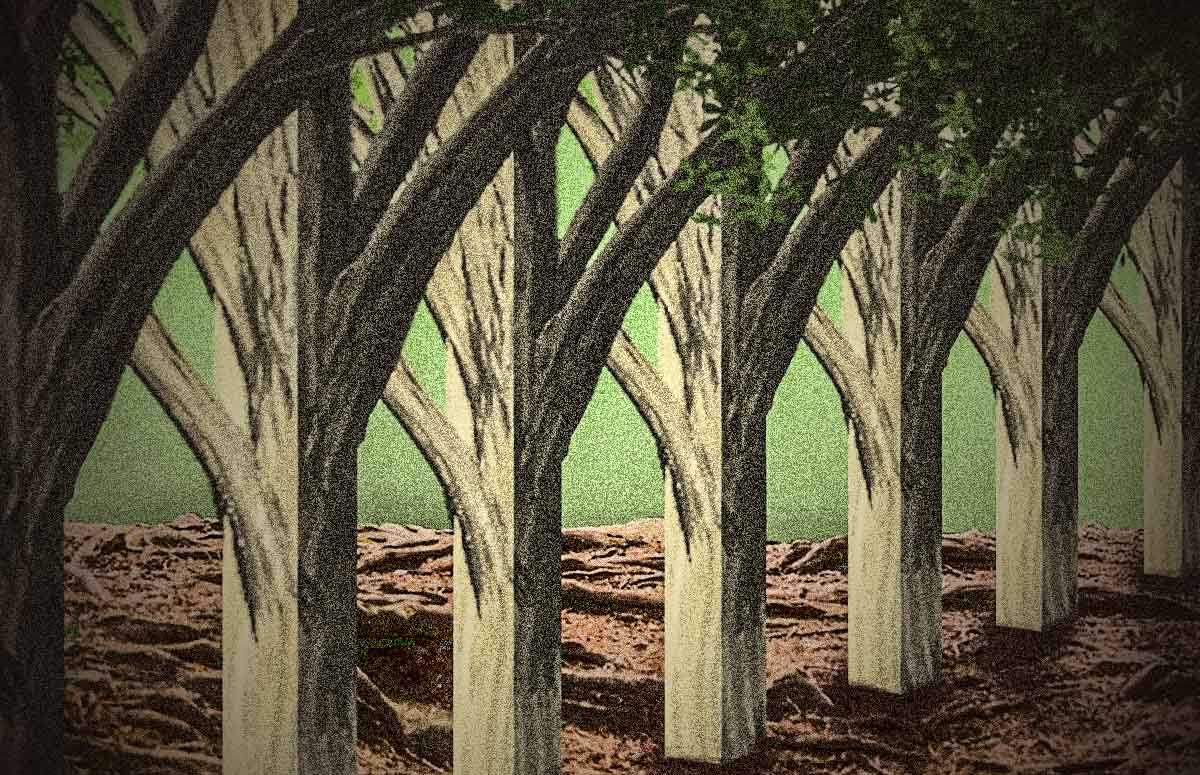
This article discusses architecture's contradiction to the habits of nature and how it impacts us as humans.
“If people do not have angles then we should not live in boxes.”
- architect Charles Deaton. 1963.
90 degrees, the most functional degree, rules our world. Through the pioneering of technology and engineering, architecture has lost its character, but most crucially it has lost touch with nature. Are humans truly healthy in modern civilisation, or were we better off as hunter-gatherers? Unfortunately the rest of the ecosphere does not enter the question here as the answer to that is simply obvious.
The natural environment takes form based on efficiency, strength, resilience and adaptability with no regard for neatness. Life on Earth has spent billions of years adapting to changes; corners and flat spans simply cannot exist in the natural world as it creates stagnancy and halts evolution. Humans strive for change, which is now more crucial than ever, and yet the static environment we’ve created ourselves does not allow room for change.
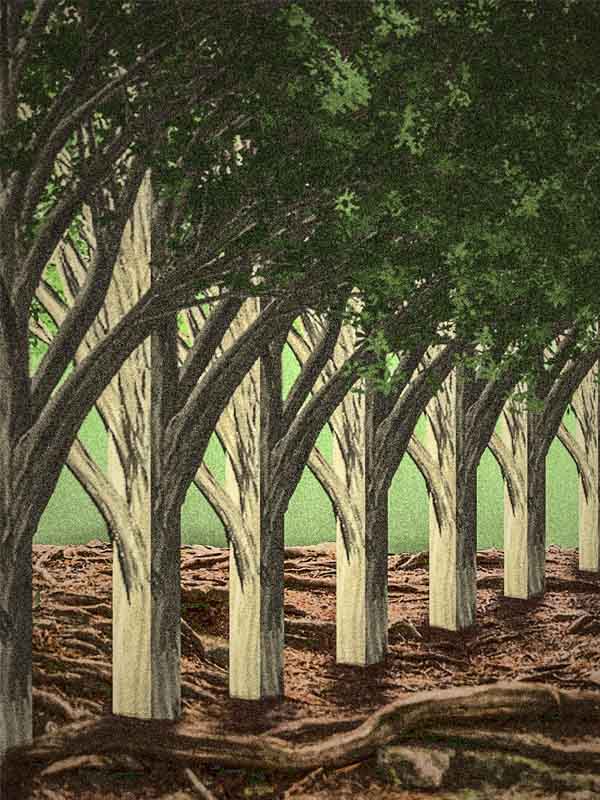
We as animals are a part of Earth's natural order which certainly did not intended for us to attend zoom meetings and have 100-storey concrete buildings. With that being said, this is the environment we are in and we should not yearn for a reality that does not exist, but rather seek reasoning within architecture in its current state. Rather than vomiting hatred towards our failed metropolis, we shall recognise the mistakes of the past, understand the present and seek optimism for an eco-centric future. This article evaluates why the box is our built worlds only dominant form, the role architecture plays within human evolutionary mismatch and the effects it has on our health.
The Circular Home.
It is a canonical event for every student of architecture to wonder why we don't build circular homes, a question that is never truly answered to an adequate degree. Based on a shallow mentality that the most functional building is the best building, the circle home is at most times crossed off for its inefficiency, difficulty to construct, poor repeatability, and poor functional programming of space. However on civilizations endeavor to 'solve' the dwelling, we chiseled structure down a box and resultantly separated ourselves from nature, completely. Though revoking our animalistic and existential foundations grounded in nature seems to outweigh the whole 'functionality' issue to be honest. Straight, vertical and wide spanning flat surfaces are not a product of nature, but curves are, so why are our homes not circular?
Approximately 12,500 years ago, the Neolithic revolution saw a transition from the nomadic egalitarian ways of hunter-gatherers to the modern practices of farming and permanent settlements. This brought rise to architecture as we know it and gave form to many types of human shelter. It is commonly believed that the foundations of architecture stem purely from ancient forms of circular-based shelters such as teepees, mud-huts and yurts. But this is uneducated Western-media orientated assumption of thinking all ancient dwellings are African mud huts, when actually there are many examples of rectangle-based shelters from the same timeframes.
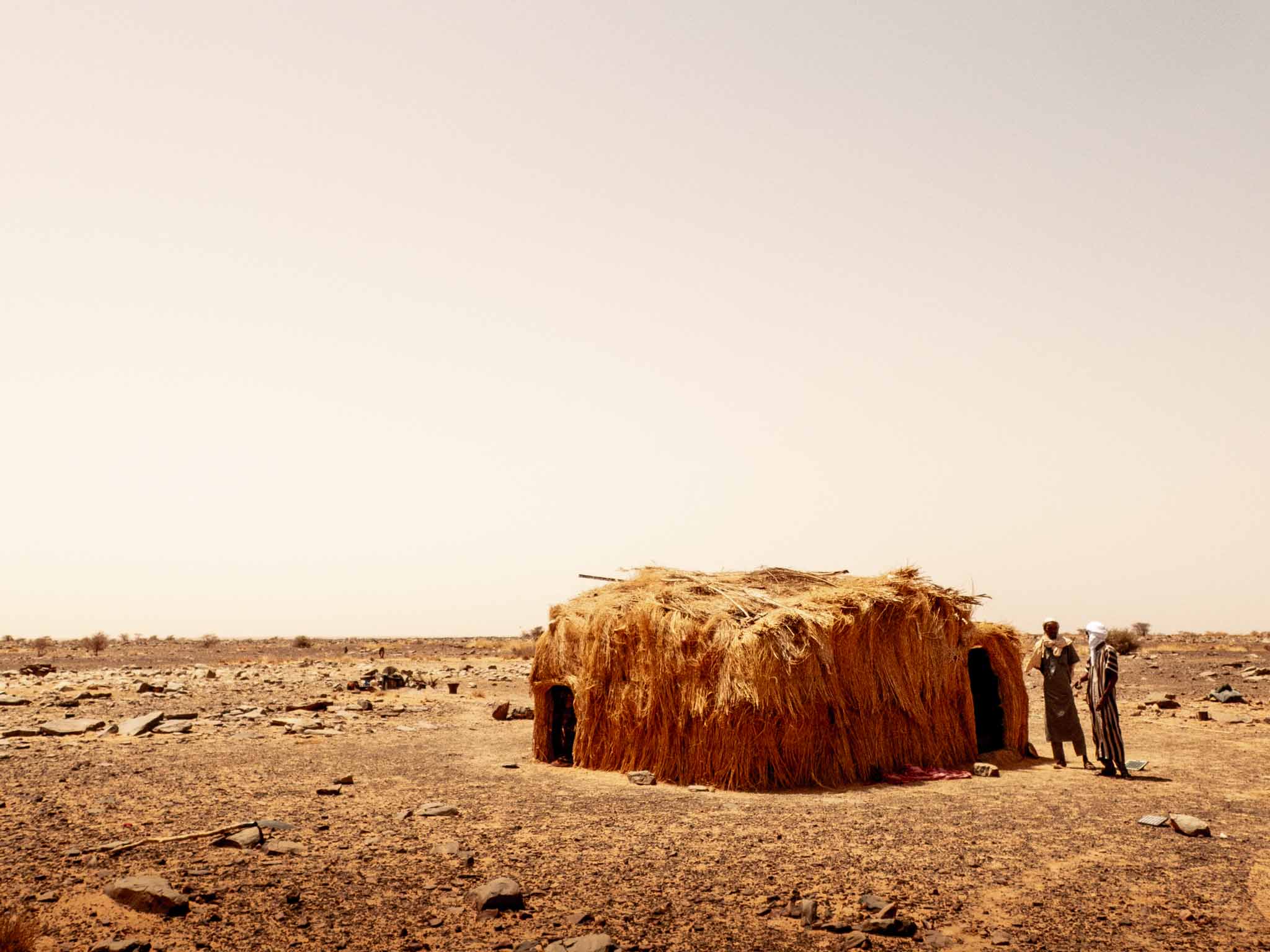
Ancient structures were built in the most efficient manner using what was locally available. Parts of Africa had adobe and mud so they created the mud-hut, Kyrgyzstan used sticks and straw to create the yurt, in Papua-New guinea they used wood to create the treehouse. The most prevalent resource used in dwelling construction today is timber, which grows straight and vertical. Later civilisations discovered that the most efficient way to assemble these members is in a geometrical fashion, using grids, perpendicularity and repetition for efficient construction and thus giving rise to:
The Box.
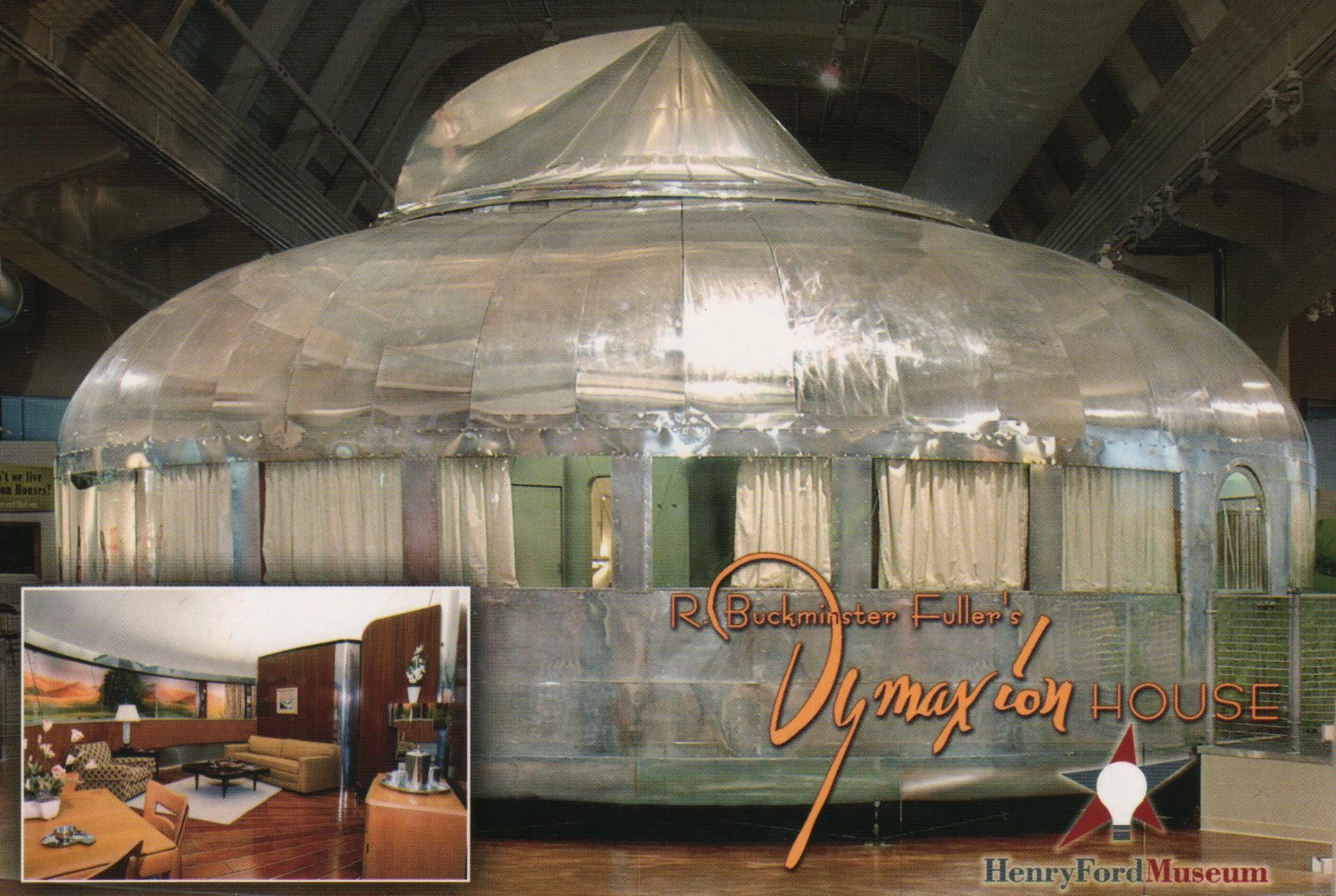
Early societies capitalized on such findings and we should clearly not fault them for his, however even Bucky himself recognised the exponential advancement of technology, allowing us to create structures just as, if not more sound and with greater complexity. We do not need to confine ourselves to grids and boxes any longer. So we should start building circular after all? Well… Perfect circles are not a product of nature either.
You may wonder why all this nature talk is relevant, why must architecture resemble nature? What makes modern design incorrect for
simply separating itself from nature?
To this I say:
"Wake the fuck up."
We are animals, we cannot disqualify that we are a product of Earth and therefore separating ourselves from nature is fundamentally wrong for us as homo sapiens. Our cities have reached a point where they simply cannot become anymore opposed to the natural environment. The abomination of Modernism and capitalism stripped architecture of its last tethers with nature. Ornamentation served as a psychological tool to keep us grounded in our natural roots. Expanses of flat, grey, repeating and dull buildings strip the brain of stimulation catalysing societies current "wave of mental illness".
Evolutionary mismatch in architecture.
Let's talk about how city-driven evolutionary mismatch affects us, and how this relates to societies sudden 'wave of ADHD".
There is no over-diagnosing of mental illnesses. That's a fact. We're only now discovering just how detrimental the city is to human health in a multitude of ways. Yes, life expectancy is higher than it used to be, but we are seeing rise to illnesses, disease and physical impairments that never existed when we grazed the land as hunter-gatherers. ADHD is not a fundamental flaw of the human being, those with ADHD are not any worse at being a homo-sapient than those without. We as animals were never meant to sit still for 8 hours, its only the strongest and most adaptable that are capable. The catalyst for this the lack of stimulation from the artificial environment that we made for ourselves. For 300,000 years, we were surrounded by nature and its curation of order within what seems to be chaos. Never were the eyes meant to see or experience the flat, large spanning grey or white walls, black straight roads and repeating housing blocks that we experience today.
Throughout the ages of attempts to perfect architecture, we've managed to devolve the human. As hunter gatherers we were very well equip to function in our surrounding environment, but the city that we've created practically instantly on Earth's geological timescale has transformed the human environment and our bodies are no longer equip to our new habitat. This phenomenon is known as evolutionary mismatch: the disequilibrium faced by a species whilst evolving to an environmental change, i.e. catching up. Examples from the past include animals adapting to the ice age or to the extreme conditions left from the asteroid that wiped out the dinosaurs. For us humans, the change in climate and environment is our own doing.
If the entire history of homo sapiens were compressed into a 24 hour day, humans would have only lived in anything more than a stick hut
for the last 20 minutes, modern industrial cities for around 70 seconds. The transformation from nature to city was extreme, if our own
body were to undergo such a transformation within a day we would probably die. If we extend this timeframe to the age of Earth, structures
such as Stone Henge and the Pyramids of Giza would only be about 20 milliseconds old…
Our cities are new, but our brains and bodies are still ancient. We are not wired to function in a city.
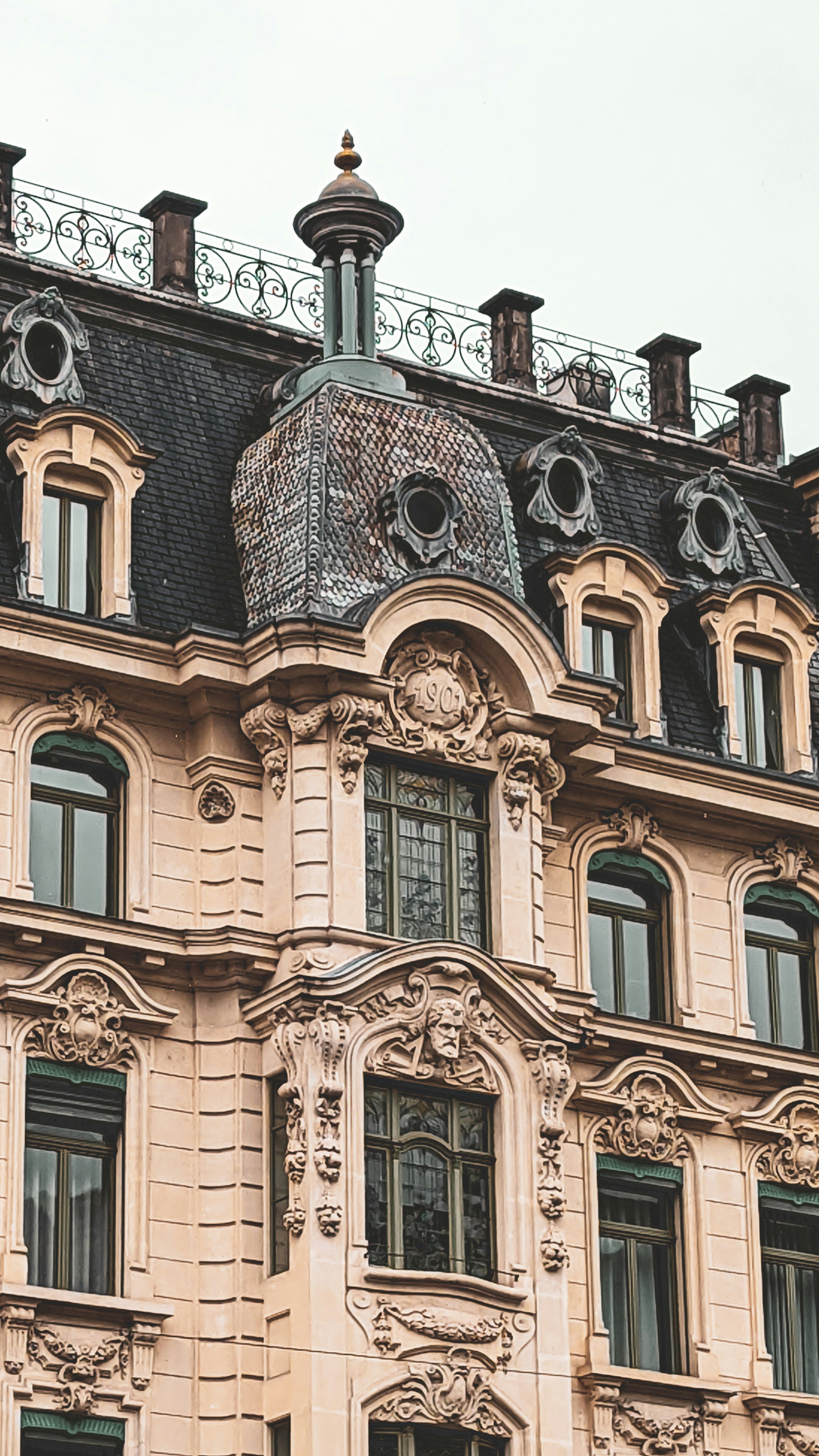
Old architecture retained a connection to nature through ornamentation. The stylistic details of old buildings actually mimic the natural environment. The 2004 book 'The nature of order' recognises that features within old architecture such as scale, strong centres, boundaries, alternating repetition, contrast, interlocking and ambiguity create a harmony that replicate nature. The positive effects of this, which psychologically bring us back to nature are proven through studies, concluding that the same parts of the brain are stimulated from nature and from old architecture.
So apparently nature is good for us?
Obvious right.
So after 300,000 years of human evolution, why do we build desolate white boxes?
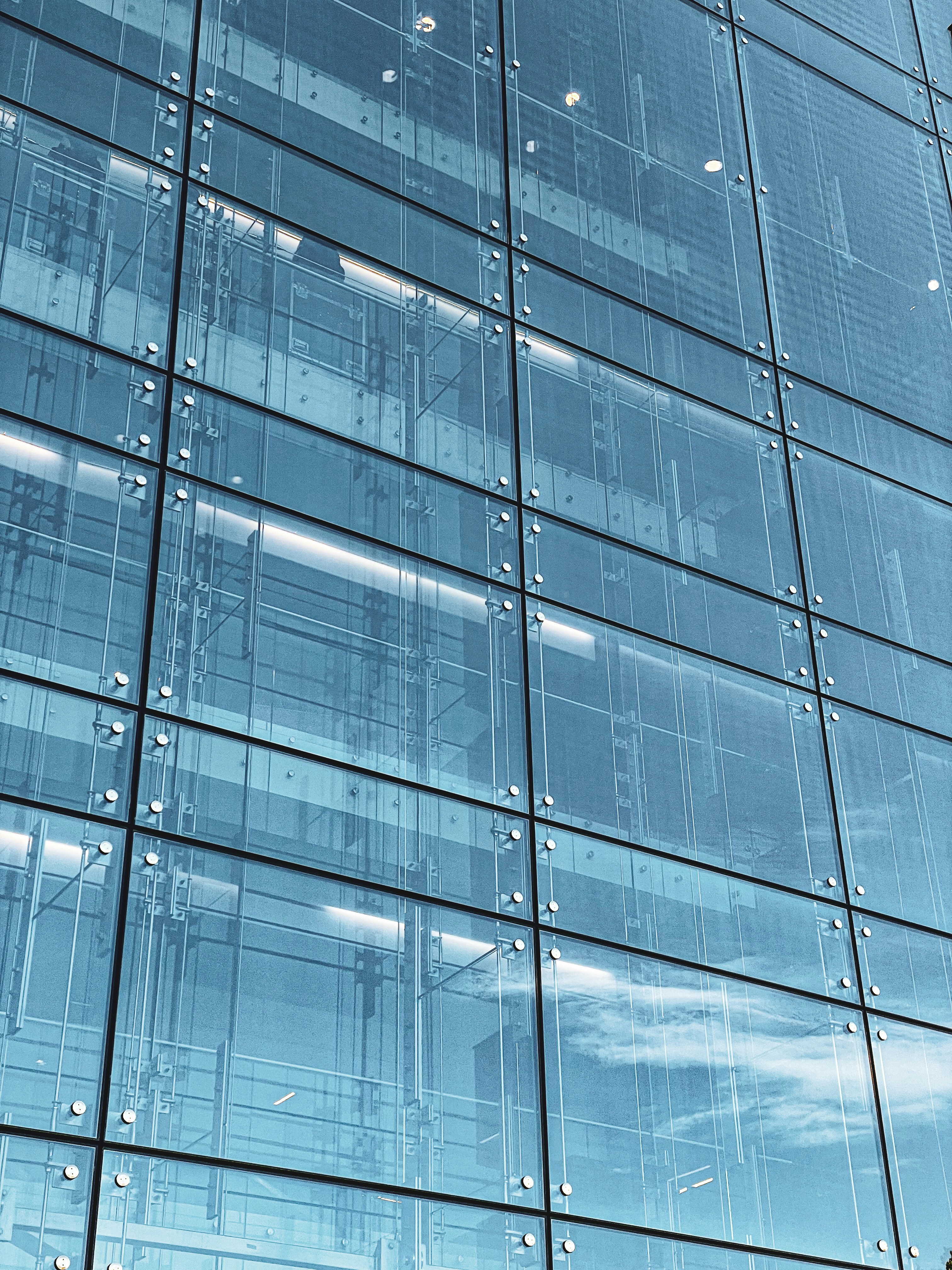
Minimalism is often associated with tranquility, and a calm state of mind, but the science does not lie. Minimalism is bad for us, if you'd like to argue that it is beautiful and the 'timeless' 'international style' then quite frankly you are advocating for the dehumanizing of our world. It is not even worth getting into the facts because it's simply obvious; do you feel more at peace strolling through the forest or the side of a busy road? Laying on the beach or sitting in a doctors waiting room? Sitting by a fire or in your office chair? One is nurturing us as animals, the other strips us of our roots.
Are we all to just cross off the ancient cultures and forget that all of our worlds elders worship the Earth. They treat the Earth as
another living animal. Now we're seen as hippies for having these beliefs but the truth is, we as humans have just strayed so far away
from our true animal roots that thinking of ourselves as an equal part of Earth is just inconceivable to most.
Earth is sacred, Earth is living, we are all a part of Earth. We've all forgotten this.
The Solution.
Balance is not the answer.
The truth is, to say that there is a possibility for civilisation to be balanced with nature is to say that nature before civilisation
was unbalanced. The natural order of Earth will never be balanced so long as human civilisation exists. But we can have equilibrium. To
balance is to have an equal proportion of elements, equilibrium on the other hand implies a state of stability within various elements.
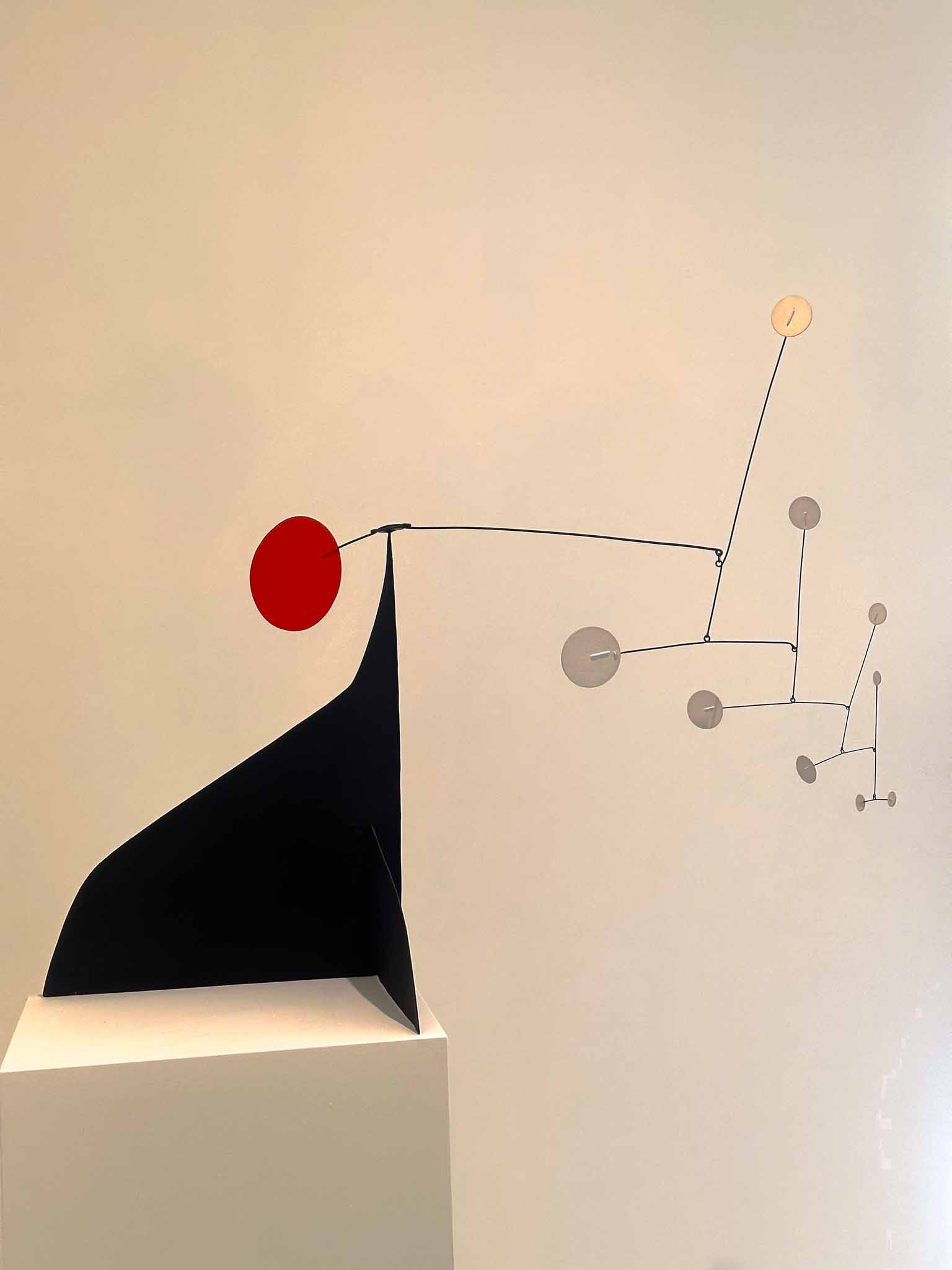
A system can still have equilibrium even with dominating elements. Calders 1960's sculpture 'Red plate, white dots on black serves as a
visual means to this notion.
Opposing light with dark creates balance. But the light that we use to see in darkness is equilibrium and so is the darkness that is used to filter light. The eco-centric solution is using architecture to comfortably shelter humans within the natural environment. The anthropocentric solution is allowing the natural environment to thrive within architecture. Currently neither exist.
But as much as we advocate for the trees, we are architects, so this article is not about restoring the natural world but instead about restoring a sense of grounding to humans by integrating nature back into our cities. So for the sake of human health here's a few ways architecture has been and can be used to nurture our cognitive state:
-
Ornamentation
- Nature features layers and layers of complexity. The closer you look the more you see, this is a strong characteristic of old architecture, when we still retained some ties with our animalistic foundations. We are quick to revoke ornamentation from a building because it is said to have no contributions to its function. But its function is to serve the human, and nurturing our cognitive health is part of that.
-
Thigmotaxis
- Thigmotaxis is the term used to describe what is known as the “wall-hugging trait”. Animal species and humans naturally gravitate towards an edge due to natural instinct. Think of olden day streets with a 1:3 ratio between street and building, it feels pleasant to be engulfed. We love old architecture for its beauty, but it is rarely known is that it subconsciously nurtures our cognitive state. Modern car-orientated shopping districts are the epitome of what is bad for our physical and mental health.
-
Building faces
- I'm talking about this in literal terms. The stylistic techniques used in old architecture literally represent faces with windows acting as the eyes and the portico being the mouth. On a deeper level though, this relates more to recognition and differentiation.
- Humans are calmer when faced with stimuli that they can easily recognize and differentiate. We use eyes, nose and mouth to read faces; in architecture, windows, doors and ornamentation perform the same role. Differentiating modern skyscrapers, however, is like trying to differentiate a blank wall from another blank wall.
-
More nature
- Plain and simple. How do we ground ourselves in nature? Be in nature.
-
Buildings need to evolve and adapt
- Trees are never complete, they are forever growing and evolving. Nature changes, animals change, but architecture does not. Renzo Piano suggests architecture should be a set of flexible systems rather than fixed structures.
-
The nature of order
- Equilibrium
- Strong centres
- Asymmetrical balance
- Alternating repetition
- Deep interlock and ambiguity
- Contrast
This nurtures and grounds the brain:
This confuses and stresses the brain:
So to answer the earlier question. No. The solution is not to contradict the box by building a circle. It's seriously as simple as finding any and every way to bring us back to nature. Physically, metaphorically, poetically, there is no right or wrong solution as long as the intention is strong.
Think of a tree, something so purely organic. It is so completely random in form and yet it has very strong mirror and radial symmetry, it achieves equilibrium through grounding itself within Earth whilst also growing away from it, its roots in the ground mirror the splayed leaf canopy in the air. A tree is a product of nature, there is nothing artificial about a tree and yet it still maintains the features that we require for a functional city.
Non-architects love a green wall. Architects despise them for creating a false sense of eco-friendliness, which is true. But architects should
not design for architects, their job is to design for the people. This is why modernism failed horrifically. Believe it or not, Modernism
actually had the intention to advocate for an appreciation of nature, but professional architecture jargonists butchered this intention.
Green walls are not solving the climate crisis but god damn it they look nice and they make us feel good, stop being so proud and just
design the fucking green wall.
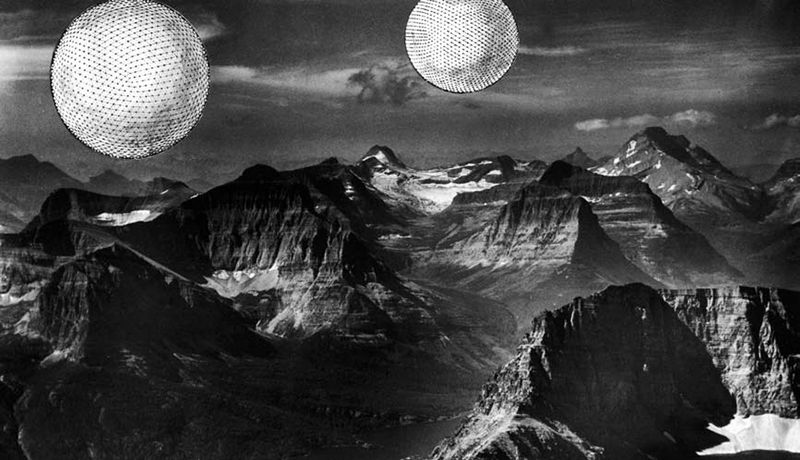
Architecture must tread more lightly on Earth.
Reform.
Refuse.
Recalibrate.