“When we build, let us think we build forever.”
- John Ruskin.
Future generations will be mortified looking back at this age wondering how humans could ever exist in such an all-destructive manner. We can excuse the past 200 years and the industrial revolution, they didn’t know any better. But now, we’ve maintain these horrific ways of conducting civilisation even though we all clearly understand the implications of our all-round unsustainability. The successor of modernism was not post-modernism, it's embarrassment.
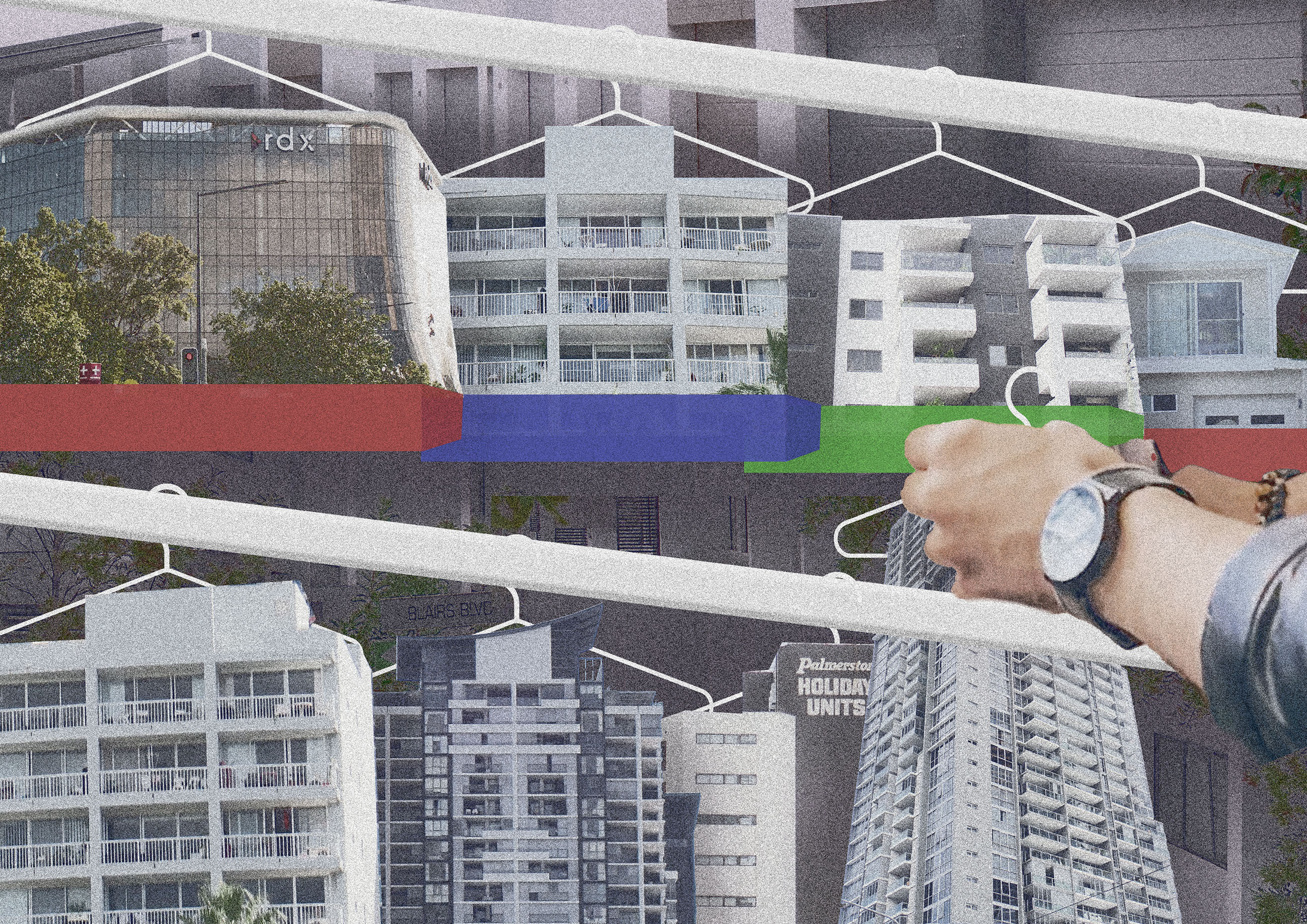
I sit back as a powerless architecture graduate witnessing the world go up in grey concrete flames, so I think to myself: "how do we stop our new-age vicious cycle of architectural temporality?"
Designing permanence is often thought of as the sustainable solution, which in some sense is correct; a one and done thing like old architecture. The idea of this is correct, but our new age progresses too quick to allow for architectural permanence, obsolescence happens in a matter of years. We've been stuck in a design-demolish-repeat cycle for so long now that we as architects forget, we don't really even consider that the buildings we design will have a demise, within 20-50 years. We must stop ignoring the fact that society moves too fast now to have permanence in anything. No one can possibly know what is required from our architecture to be future-proof.
Everything on Earth that supports animal life exists in a sustainable cycle of temporality, repeating and evolving since the dawn of time. So should we instead lean into this notion of architectural temporality, and allow ourselves to continue 'fast-architecture' but only in such a way that is non-destructive to everyone and everything?
Biomimicry, is usually woven into a building in physical form, but what if we introduced natures non-physical phenomena by replicating the lifecycle of our biosphere into our architecture? We must stop being ignorant and recognise that our building are no longer forever, and allow for sustainable growth, adaptation, disassembly and reuse.
Our architecture is no longer designed forever.
Can we stop pretending that our fuck-ugly concrete and steel office block is ‘timeless’ when we all know it’s going to be demolished in 15 years when filthy rich developers realise it's “looking a bit obsolete now.” No one in 100 years is looking back at that shopping strip or office block in awe at its beauty, for that matter no one is looking even now at that eye-sore office block appreciating its beauty. How can we even expect architectural permanence when we barely even care about the buildings existence in the first place?
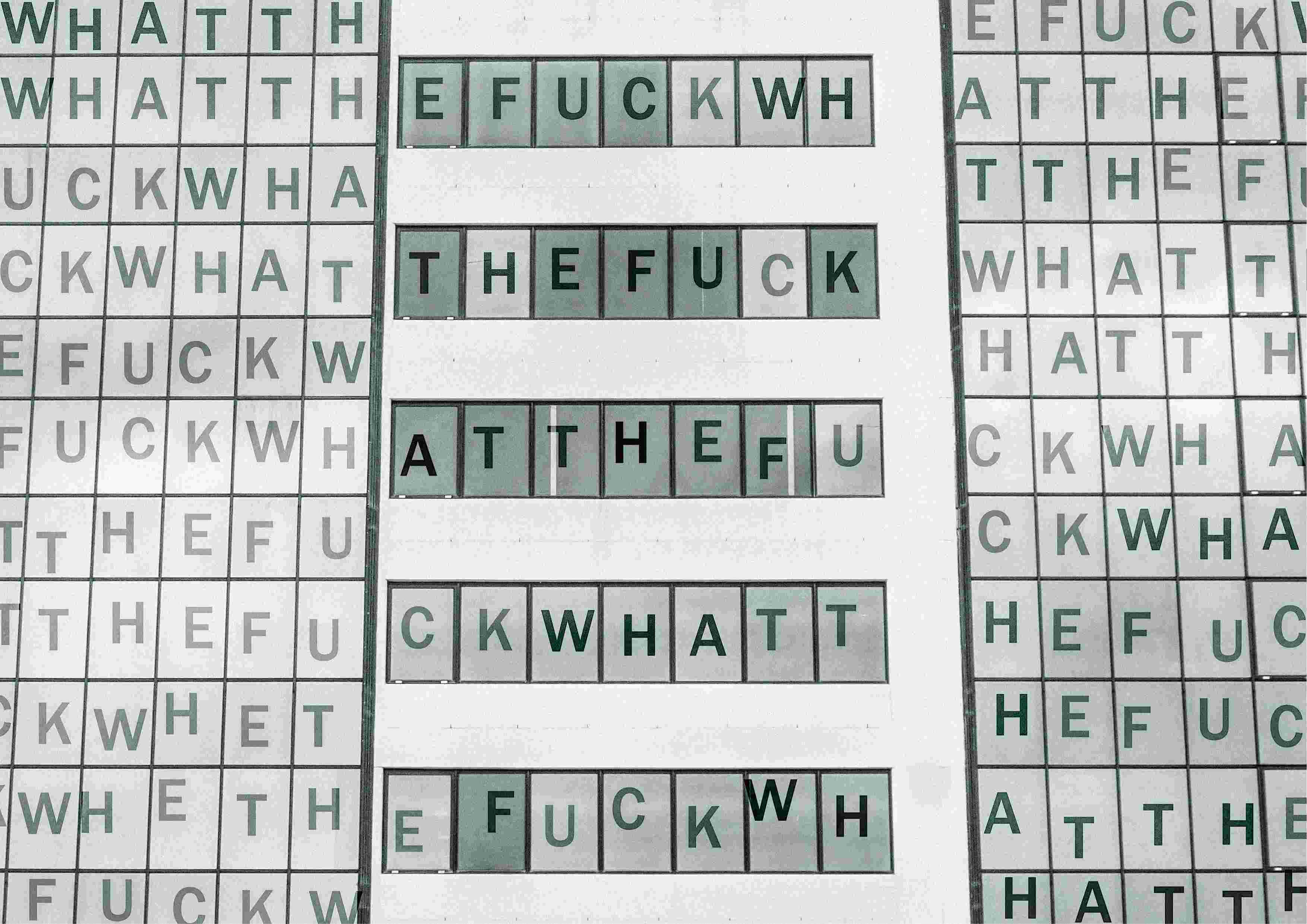
Most commercial buildings have a standard life of around 50 years, but it is common for them to last less than half of this. 10 years of glory is pathetic, even 100 years should be seen as pathetic. When we make the sacrifice of scarring Earth to erect our building, it should at least pay off in permanence. Society needs a slap on the wrist for normalising the idea of treating architecture as a trend that we can undo or replace when we're sick of looking at it.
Unfortunately unsustainable anything has been the convenient and cheap option for the past 100 years. Who wants to employ masons to chisel stone facades, or buy high grade, responsibly sourced materials? No developer wants to spend extra to ensure the building can be adaptable or reused at the end of its life. Developers save their money, and every living thing on the planet pays the price instead, deteriorating the health of humans and ecosystems, even governments must pay billions to chop and change irresponsible decisions made in past developments. The money hungry developer fails to have critical thinking and foresight as to the consequences of their shallow actions.
As students we supposedly learn how to design consciously, but if you were to ask a student about their final assignment,
a multi-residential building (or there abouts) how long they think it may last or what will happen when new development
wants to take over, there would be many shamefully ignorant blank faces, myself included. Our education system dabbles
on the topic but fails to ingrain the severe implications of poor architecture.
So where do we go from here?
Temporality in architecture.
The practice of architecture is not what it used to be. Our buildings no longer lie in the hands of the elite, architecture is no longer designed with expertise and built with skill, lasting for centuries. Any schmuck can get a degree and become and architect, which is great in theory, until the world becomes overbuilt with rubbish. By giving design reign to the mediocre, a collective mentality has been reached that good architecture is no longer crucial, and we can just replace poorly designed buildings. We have the ability to build forever, but we choose not to. The more time goes on, the more temporary our built world becomes, this is something that cannot just simply be altered, so we must instead find a way solidify this trend and allow for sustainability within architectural temporality.
Biomimicry. Architects tend to apply this to its shallowest degree. The roof looks like butterfly wings, the curve represents a river and so on, but there's more to nature than what meets the eye, there are more eloquent ways to weave the biosphere into our design world. Using time as a material and life as the inspiration, we could design not just the building itself, but an architecture system capable of infinite repeatability. Like a tree, a construction of nature that does not exist alone, it belongs to a highly complex cyclical system.
The life of a tree grows from its seed. When the tree surpasses its age of growth and beauty, its' seeds disperse, forming the next generation of trees. Once dead, the tree does not remain standing uselessly for eternity nor does it crumble into a mound of rubble. Every part of the deceased trees' matter continues to serve its surroundings, mycelium feeds off it, animals nest in its hollow. This allows the trees to foster life in natures city forever.
The buildings frame is a seed from which the life of the building grows. When the building has passed its age of beauty and functionality its frame can be dispersed and used to create a new building/s whilst the skin and non-structural fabric is passed on to anywhere else that requires its use. It is foolish to think that any single part of building material has not a single use for anything in existence (you can find an example of this near the end).
Your building will have a demise, and unless you design accordingly, it will become a 20,000 tonne eye sore, or join Earths ever growing pile of land-fill.
Of course, sustainability is no new information to anyone, there are 1000's of articles and topics around fast fashion but there is yet to be a strong enough global conversation on fast-architecture. Think of the outcome of a cheaply made shirt compared to a cheaply made 10,000 tonne concrete box. The fact that governments implemented policy change to ban plastic straws, but continues to pump out monolithic scales of steel and concrete is baffling, but it does show that change can happen if there is a strong enough conversation. It also shows that it is possible to continue having the convenience of temporality whilst caring for our ecosystems.
We are all concerned about fast fashion, but when will we start to recognise fast architecture?
Is temporality the solution to our architecture insensibility?
The most sustainable building is the one that isn't built.
It doesn't matter how eco-friendly the proposal it, the best decision for the planet is to manufacture nothing new at all.
The 500 year old Tudor house that was converted into an office block beats the 6-star green star office down the street.
The converted Tudor office did not extract and manufacture a whole buildings worth of materials nor did it release 1000's
of tonnes of carbon for a demolition. The self-proclaimed "hyper-sustainable" office, though boasting its environmental
awards, still required construction and new materials. If it already exists, there is no extra carbon needed for it to keep
existing, you get the point here right?
Before industrialisation, everything was built to last many lifetimes. The leather couch from the op-shop beats the brand
new bio-polymer couch, the flee-market polo shirt beats the brand new cotton shirt, the 300 year old thatch house beats
any amount of mass timber construction. There is literally nothing that can possibly be fabricated that can be more
sustainable than simply using something that already exists.
Wait…
So permanence is the sustainable solution?
The thing here is that… Temporality and permanence are viable solutions. Our issue is that we're currently mixing the
worst attributes of both.
Anything that exists on Earth is either as permanent as permanent comes, or temporary, forever evolving and repeating. Think of the bedrock of Earth, grounded for millennia, or a plant that grows and reproduces infinitely. Both the permanent bedrock and the temporary plant are sustainable, one is a system capable of reproducing forever, the other is a material capable of existing in its state forever. Our architecture exudes a strange hybrid of permanent, indestructible materials, but stands temporarily, like a tree made of stone.
Old architecture is successful because it is designed consciously, grounded in age, fit to withstand decade after decade, like the bedrock of the Earth. Markets on the other hand are successful for their ability to engage with and produce for its surroundings during its physical life, then completely remove itself in an ongoing, repeatable cycle, like a plant. No where in nature can you find an ambiguous mix of both, a tree that dies and continues to take up space forever, or a mountain crumbling into nothing over a 24 hour period. This is what we're seeing in architecture today, and it's not most new-age architecture, it's all of it. We construct something that last's forever, then we replace it with something else that last forever, its just the way society operates.
So unless you are part of the elite, (at which point you'd be too arrogant to even read this blog) who has the means of designing such a significant and sensibly permanent building, it's time to start designing for sustainable temporality, begging the question:
How do we achieve sustainable temporality in architecture?
-
Design for demise.
-
Even just being conscious of a buildings eventual ending is a good step, because if we're thinking about this from the
start, then we can be more aware of design consequences and material choices.
In the spiritual home of the Japanese, lies in Ise Jingu, otherwise known as the Grand Shrine of Ise. Its use of "kigumi," which is joinery that involves no nails or glue allows the building to be taken apart and rebuilt every 20 years in a practice known as Shikinen Sengu. This practice of spiritual refreshment has been on-going for over 1200 years and will continue indefinitely with no environmental consequences. Todai-ji has a death, and is reborn, like the life-cycle of a tree.
More on that here.
-
Even just being conscious of a buildings eventual ending is a good step, because if we're thinking about this from the
start, then we can be more aware of design consequences and material choices.
-
Retrofit > Rebuild
-
Bjarke Ingles amongst many (who design with a brain) advocate for retrofitting and agree we must instead fix the bad
buildings rather than replacing them, or building entirely new ones. The only reason developers choose demolition
and replacement is cost and efficiency, the two words that overrule everything in civilisation. We save money,
but what good is money when the Earth becomes inhabitable due to human-driven climate disaster.
More on that here.
-
Bjarke Ingles amongst many (who design with a brain) advocate for retrofitting and agree we must instead fix the bad
buildings rather than replacing them, or building entirely new ones. The only reason developers choose demolition
and replacement is cost and efficiency, the two words that overrule everything in civilisation. We save money,
but what good is money when the Earth becomes inhabitable due to human-driven climate disaster.
-
Adaptability.
-
Think of a LEGO house (thank you Denmark), where everything is tacked on, then it can be tacked off to create a new house. Also
like a LEGO house, when we realise something's not quite right, or when we get sick of it, we can take off a few pieces and
change it however we like. We design with some notion that once a building is brought into existence, it can never again be
changed or modified. This can simply be overcome by designing for adaptability in the first place. If we know the future is
not going to want the building, give them a building they can change to suite the needs and aesthetics of the time.
Renzo Piano was an advocate for this, not just producing architecture with specific function, but allowing the function and aesthetic to be changed and adapted by the individual. Early examples of this can be found in his Cusago (Free-Plan) House in 1970. Or his B&B Italia Offices in 71, which uses a lightweight steel structure, its modularity allows for infinite expansion just by extending pieces to the steel structure.
-
Think of a LEGO house (thank you Denmark), where everything is tacked on, then it can be tacked off to create a new house. Also
like a LEGO house, when we realise something's not quite right, or when we get sick of it, we can take off a few pieces and
change it however we like. We design with some notion that once a building is brought into existence, it can never again be
changed or modified. This can simply be overcome by designing for adaptability in the first place. If we know the future is
not going to want the building, give them a building they can change to suite the needs and aesthetics of the time.
-
Stop extracting fucking virgin materials!
- 250 years of global industrialisation and mass manufacturing. 250 years of extracting Earths resources at a rate so shocking that industries hide it from consumers. We have everything we could ever need.
With that being said, it would be naïve to think this decision comes down to just the individual. No one (except for the higher ups) can really choose to change their ways and start making these conscious choices overnight. Architecture is a slow industry, not in the sense of fabrication (because that seems to be getting quicker and quicker by the day), but in the sense of change. Change only occurs when it trickles down from generation to generation. So if you are in no position to create said changes, all that is required of you is consciousness, because only once enough of the planet decides to stop being sheep and finally start using their brain will we start to see some real results.
Reform.
Refuse.
Recalibrate.