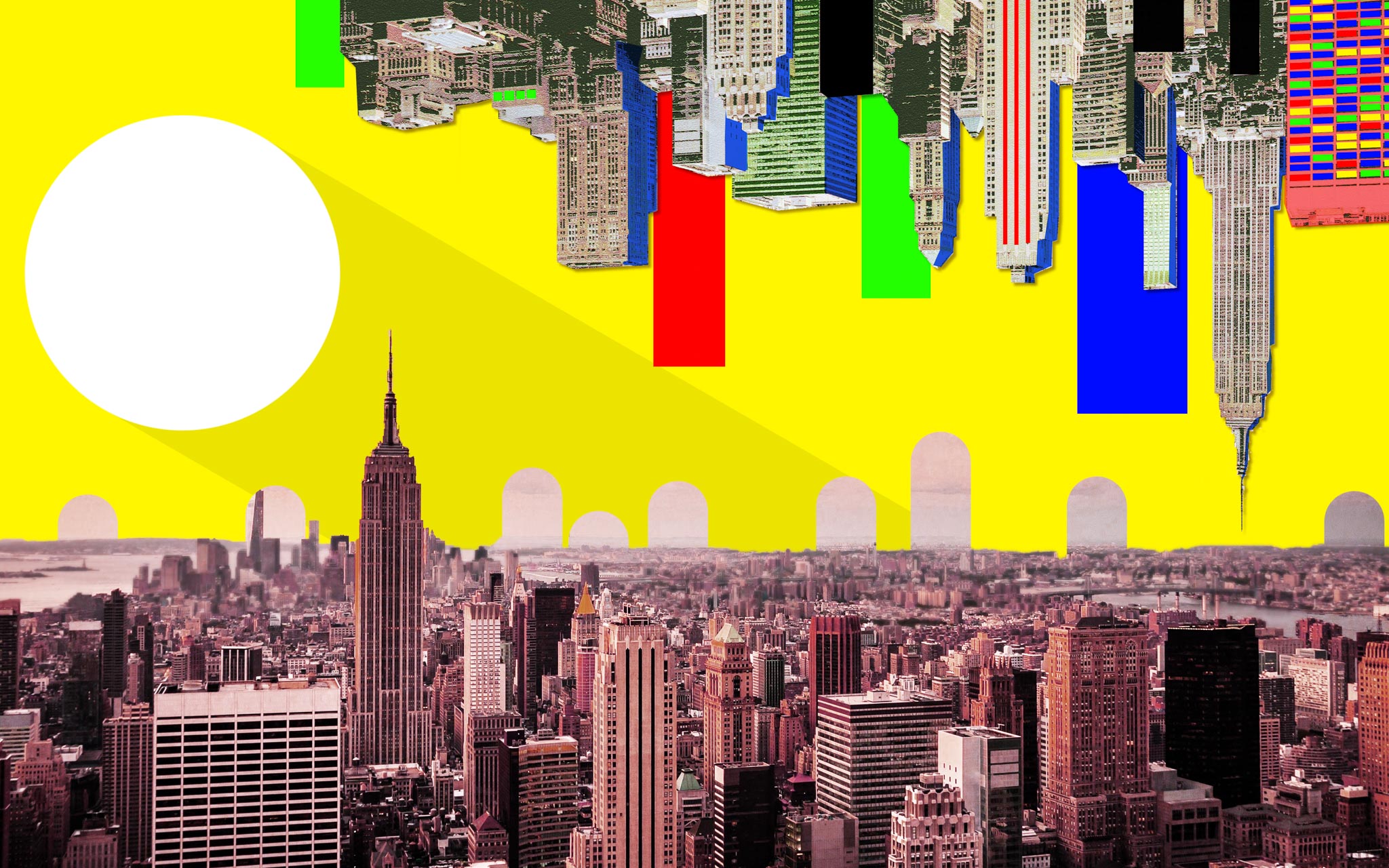
This is Recalibrates first article. If you like it, let us know. If you hate it, tell us why. This article illuminates a quality that our current design scene is missing but in desperate need of. Some excerpts have been included from my interview with internationally renowned Brisbane based designer Noel Robinson, featuring his own provocative, raw and unfiltered opinions.
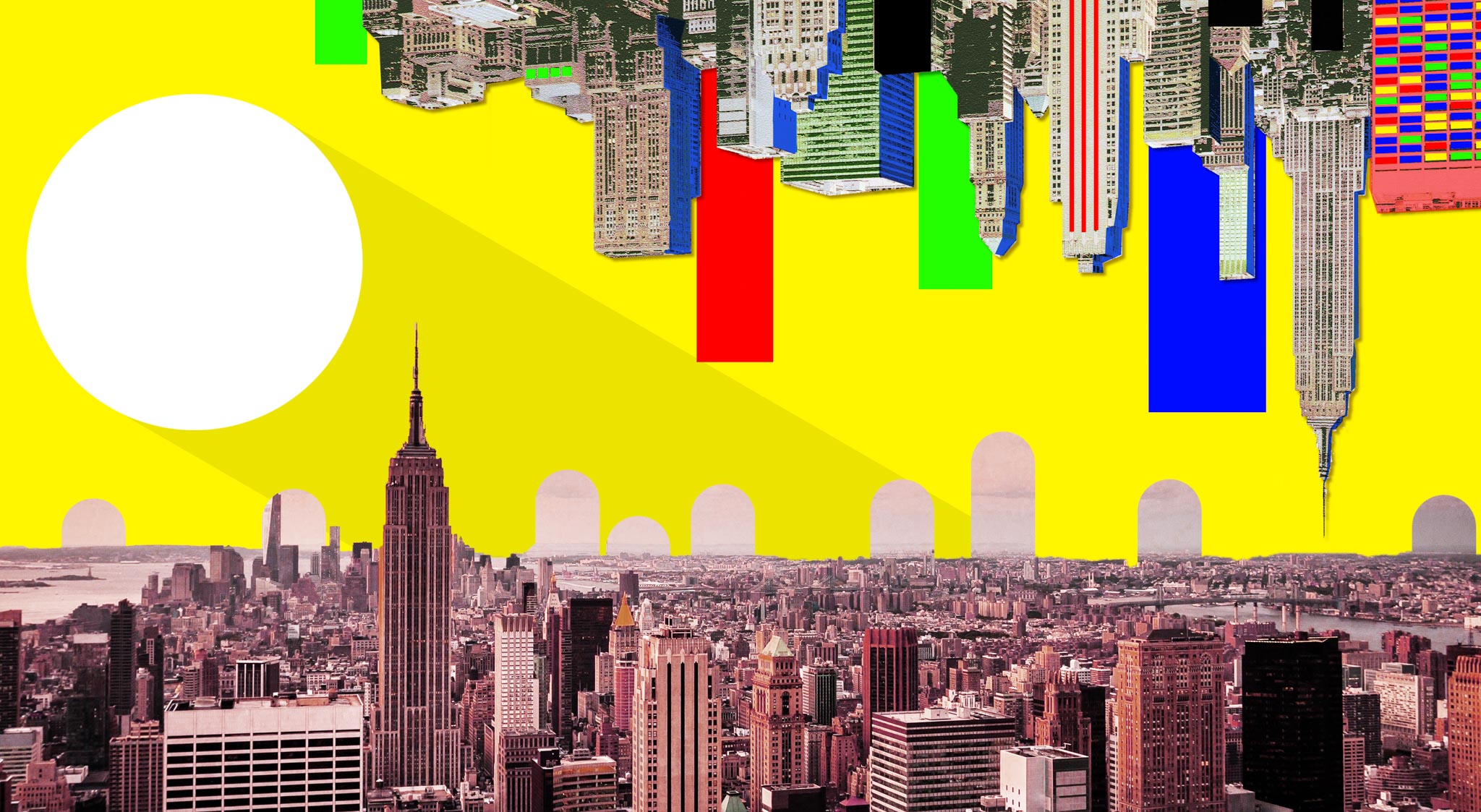
Architecture has become bleak. It's no secret. Shops, streets and skyscrapers have become homogenized as a result of our obsession with keeping in line and fear of being bad, being disliked or failing in any sense. We design the same box as the last; a box is a box, not to be liked or disliked. People may like or dislike the colour yellow - to save ourselves from potential backlash, we make it grey. Grey fits in, grey doesn't bring attention to itself, it eliminates the risk of dislike.
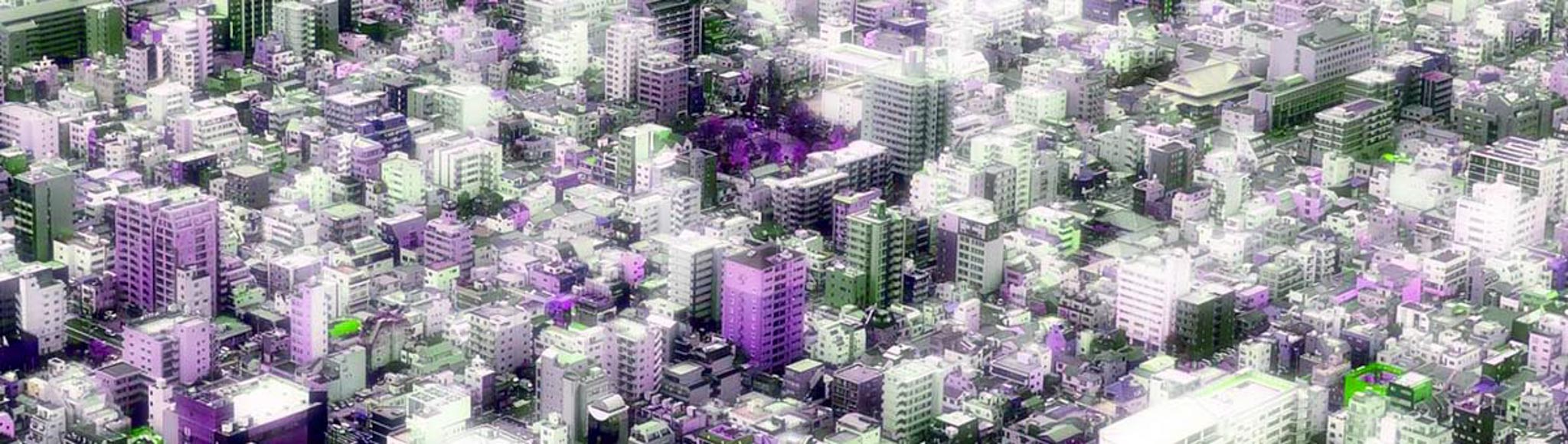
Any ‘new’ has risk; a chance of being great or completely flopping. The conformist designers (i.e. those who actually get commissions and materialise their dull fantasies) seek a middle point. But what lies in between black and white is grey, and what lies in between love and hate is meh. Since grey has become the aura of the 20th century, cities once recognised for their character are now blending into each other. The 'modern' metropolis is becoming what Archigram would describe as "A cultural as well as a physical embarrassment." Bishkek looks like Bangkok, Rabat looks like Rio and Dakar looks like Detroit.
Each century gives rise to a handful of people who are born of extraordinary nature who seek disruption, not just in architecture, but in whatever their canvas may be. The greatest minds to ever leave their mark in modern civilization have been wildly different in their means, but there's a certain trait retained in all of them; the likes of Albert Einstein and Nikola Tesla, Antoni Gaudí and Renzo Piano and all the other greats. Who would have thought a certain mutually shared trait could lead to the theory of relativity and also the world's most recognisable pieces of architecture? The link - 'Neoteny', as Einstein describes:
“I sometimes ask myself . . . how did it come that I was the one to develop the theory of relativity? The reason, I think, is that a normal adult never stops to think about problems of space and time. These are things which he has thought of as a child. But my intellectual development was retarded, as a result of which I began to wonder about space and time only when I had already grown up.”
Albert Einstein
Einstein is referring to neoteny: the retention of childlike characteristics within an adult. In the case of the extraordinary, this refers to the more tolerable traits of children, such as curiosity and question asking. When the term is peeled back, it can reveal a deeper meaning of non-conformism: figuring out for oneself what is right and wrong instead of accepting what those around have proposed as truth. What Tesla showed the world was previously thought to be figments of a fantastical world, as he puts it:
"The day science begins to study non-physical phenomena, it will make more progress in one decade than in all the previous centuries of its existence."
Nikola Tesla
This is not a science blog, so I'll translate this into something more digestible to the architects mind:
We cannot change the box if we are stuck inside of it.
When Renzo Piano designed the Pompidou Centre he reached outside the limits as to what a cultural centre can be, dared to explore a reality that had yet to exist and it resulted in a feat of engineering, a physical and cultural machine that dare I say, is the beating heart of Paris. Pompidou stuck out like a sore thumb within the Parisian uniformity and century old character; it's hated by many for this reason alone. Did the hate outweigh the love? Who knows, but it exists in a bright hue of colour, a flame ignited by the passion of its users and an icon to be studied and remembered until the end of this new age.
The most liked buildings come from the fun, the unique, the colourful and the inclusive. The only people who praise the professional concrete monoliths are the professional suit wearers themselves.
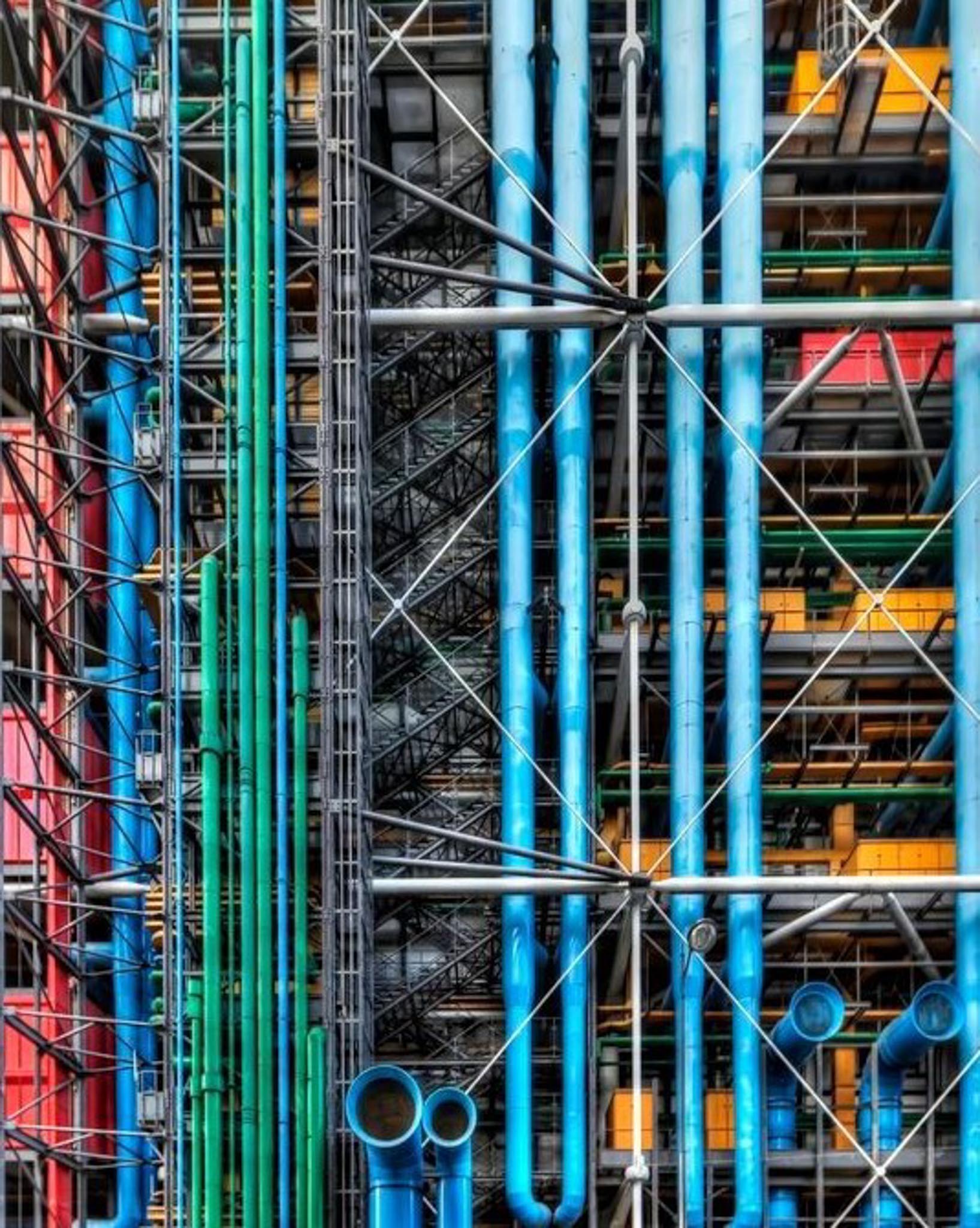
Who loves the dominating tinted glass megastructures? Certainly not those who wish for equality and a bright future for all. Compare this to the glass tunnel of Pompidou, the ski slope of Copenhill or the deconstructivist curvature of Bilbao's Guggenheim Museum; loved and endorsed by all. The fun and curious nature of these buildings don't make them childish though, Right? Well, let's compare.
Comparing the neotenous to the professional
The neotenic and their buildings:
Pompidou is a summarization of its neotenic creator. By using its imagination, it exists to discover what is beautiful rather than accepting what society tells it is beautiful, doing so through experimentation - failing and succession. It hasn't been taught the dirty 'isms' of the world, it invites all to play as it does not see class, gender or skin colour, it only seeks to love and to be loved by those around it. Pompidou plays with colours because it is fun, it doesn't feel inclined to look professional, it doesn't even know what professional is, it just wants to exist as itself: an individual. Society hasn't managed to teach it how to look and act in an appropriate manner, how to keep in line or to keep its head down and do what is asked of it. It hasn't been taught to see humans as anything other than equals because it has retained these childish characteristics. Its young spirit leads to its beauty and its extraordinary success.
"I don't preach morality, I build it."
Renzo Piano
The professional and their buildings:
Following the same routine as the past 20 years, ordering the same coffee, wearing the same light grey suit, they set off to work in their dark grey BMW. They walk past rows and rows of dark grey Mercedes, BMW's and Audi's through the carpark. In the streets they dodge the kids, the beggars, the vendors and the buskers. "I'm safe from these people in my office," the professional thinks, "as I'll never see these people in a building like mine": a 58 storey, grey concrete and tinted glass high-rise. They are greeted by their boss and coworkers all dressed just as sharply in their varied grey suits with the same 'morning' since the day they started working there. The professional is grey, mundane, uniform, conforming, un-approachable, greedy. The place in which they slave is a physical embodiment of themself.
"Ornamentation is a crime."
Adolf Loos
"Less is more."
Mies Van Der Rohe
"Form follows function."
Louis Sullivan
In summary - Design for nothing more than survival.
Beauty can not exist without ugly
Picture a coin. A materialized substance of value; one side of the coin is embossed with beautiful, intricate details. The other side is less desirable, an obscure pattern that doesn’t quite take your fancy. This is the neotenic design. The professional has filed both sides of the coin, leaving each side completely flat. By stripping it of any pattern or picture, the coin no longer holds value, it has no meaning as it is now nothing more than a piece of metal.
Up until now, the other side of the coin (so to speak) has yet to be mentioned: architecture that missed the mark, the eyesores, the impractical and the ugly that is hated all round. The truth is, incredible design simply cannot exist without its distasteful counterparts. Everything in life is balance, so where there is light, there must be dark. We cannot accept the modern reality of dull. Yes, dull is balanced in between light and dark, but dull can never be anything but dull. Here's what Noel Robinson had to say about 'the coin':
"You gotta let everybody shine. Some people make a fuck up of it. You could put a bomb under it."
"Frank Ghery takes the piss out of everybody."
Noel Robinson
On my daily commute to the office during my time with Noel, I'd walk through newly developed urban district: "The Smith Collective." Within its neighbourhood of medium-rising, brightly coloured buildings, sculptural forms and pedestrian orientated spaces exists an even newer development: RDX building.
It looms over the Smith Collective like an evil master. Its dominating scale and dark-brown tinted glass façade hides what happens inside. The building can be argued as being 'stark,' 'bold,' or whatever jargon you see fit, but really, it's just glutinous display of power and wealth, designed to close off the professionals from those who will never reach that level of stature.
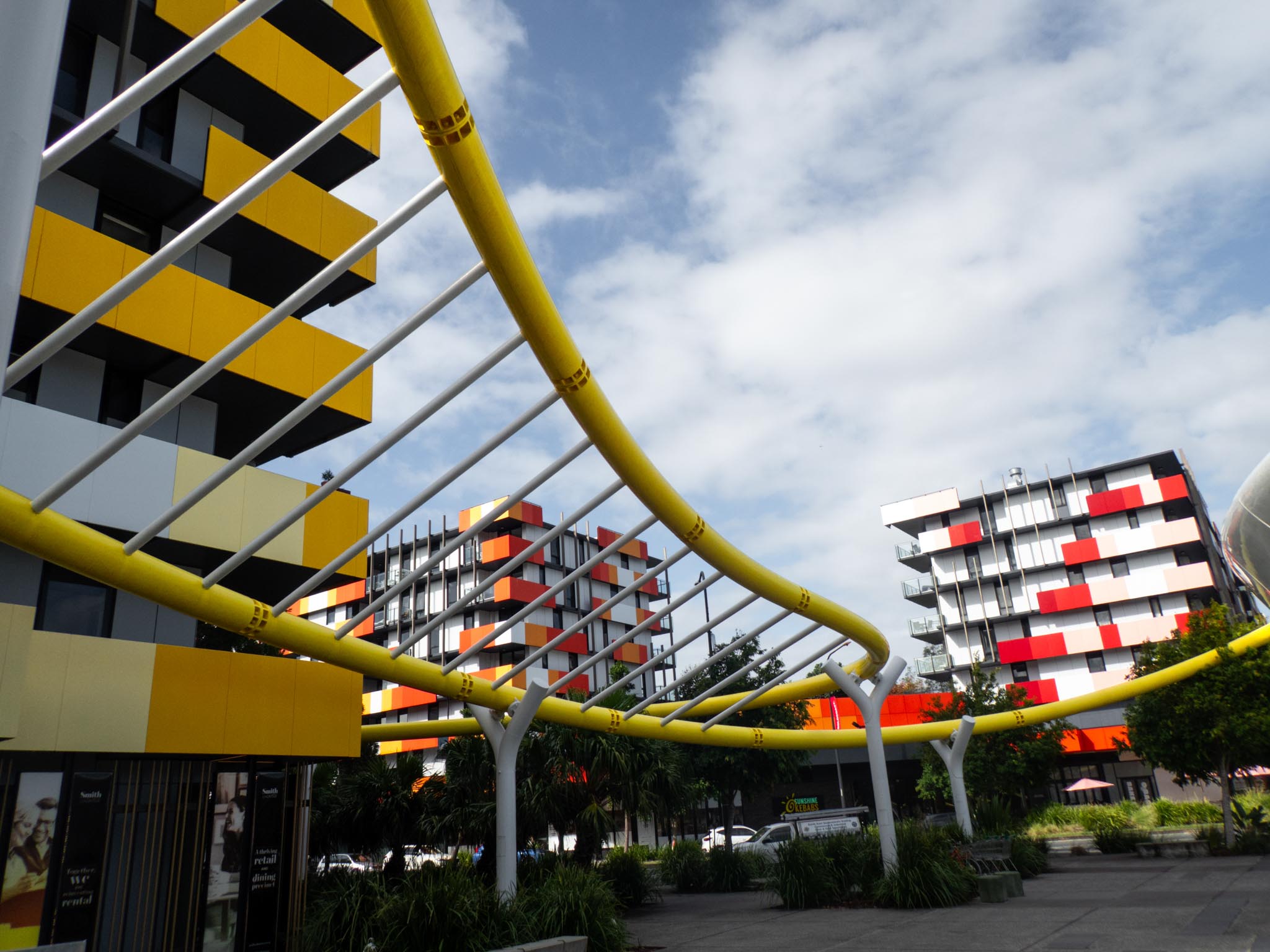
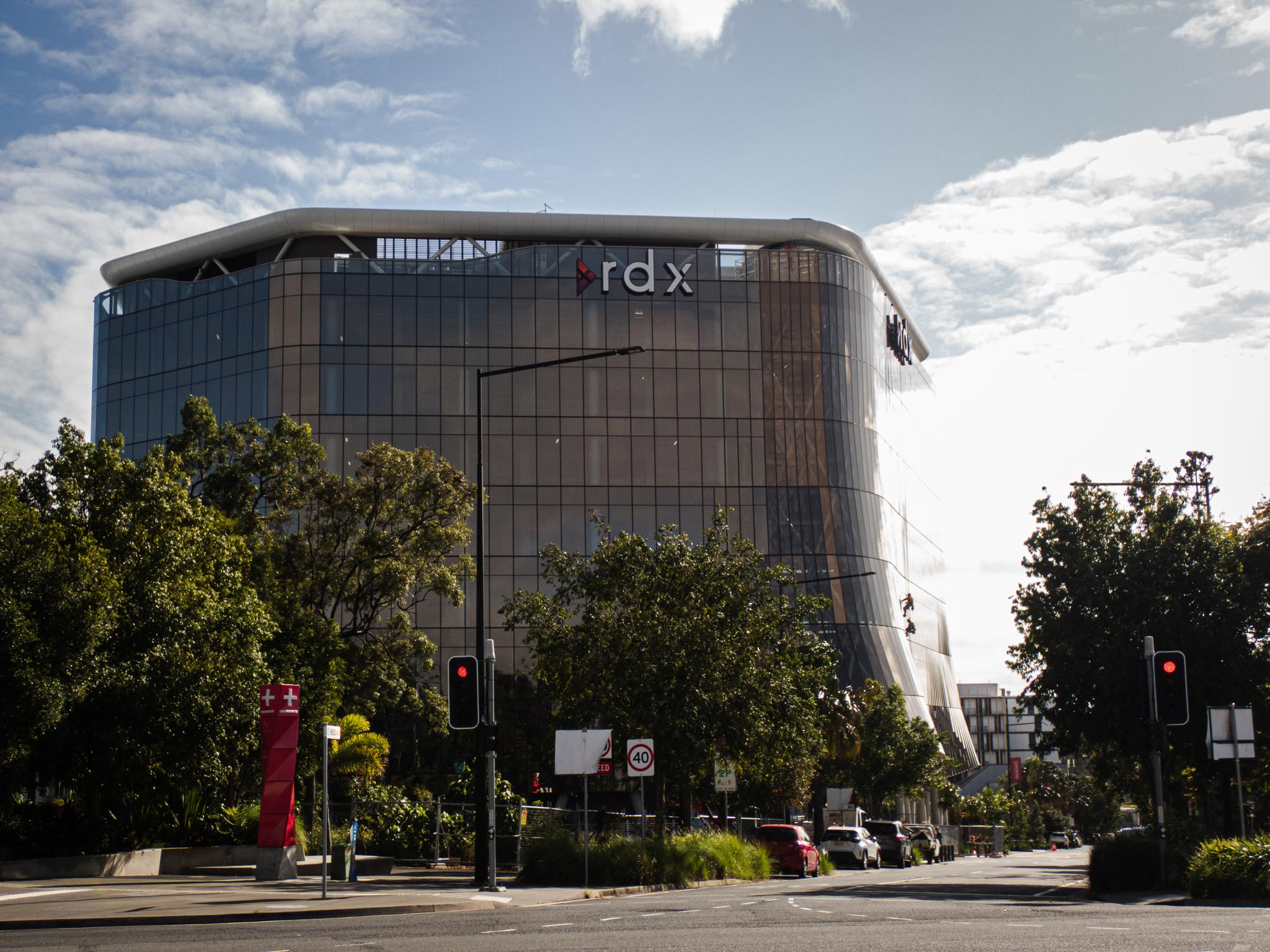
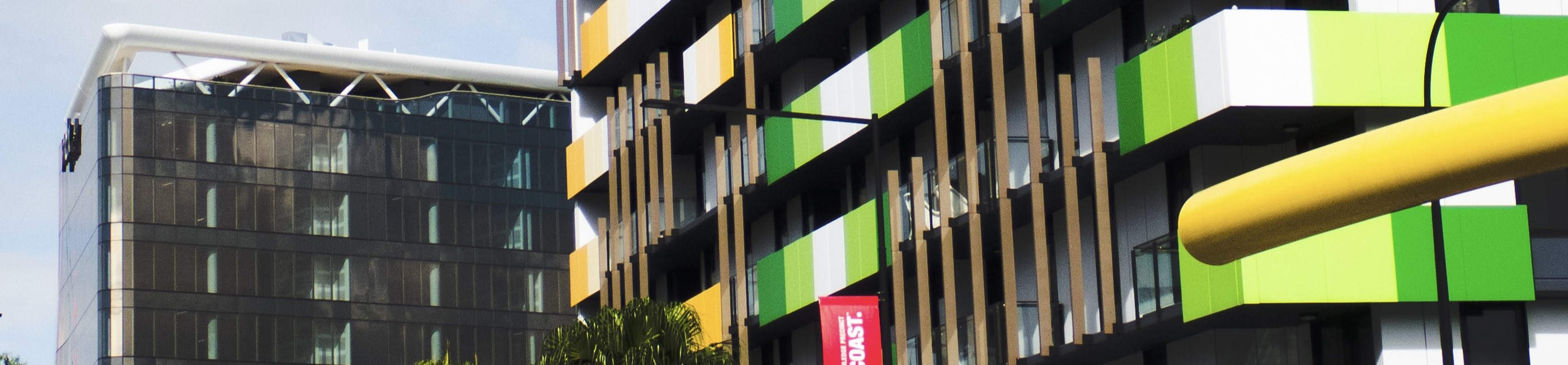
The ugly side of the coin. At face value, on the most shallow level possible, the RDX building looks 'cool' and the Smith Collective is not 'cool'. But the thing is, the RDX building stops at cool, it has no more depth. Smith Collective has layers to it. This woeful analogy explains it quite well:
A comparison between the Neovision and White Fox wearers and those who dress to their own accord. The free dresser has chosen an outfit that expresses who they are and how they want to be seen, everyone on Earth is different, so some people like the outfit and some think it looks awful. Their sandles were bought during their back-packing trip in Morocco; their yellow shirt expresses warmth and is also their favourite colour; the shorts around their waist are from the op-shop because they want to save their money, and the planet. They have substance, they're expressing a story of who they are, where they're from and what they want to convey and in response, we as viewers feel something towards them. We love it. We hate it. We want to be their friend? We want to tell our own friends about that super cool/appallingly dressed person that we saw today. The other person in this equation saw a cool outfit in the trendy store and bought it. Granted, they do look cool; of course they do, this is what society has constructed cool to be. Is there anything else to their expression? Absolutely not. There is no substance, depth or story to them or their expression. They will discard their outfit as soon as it falls out of fashion and buy the newest set of trendy clothes…
You get the point here.
The Smith collective features an office building for the professionals, designed by the neotenous. Bright pops of colour give it a fun and happy feel, the form speaks with the street and those who pass by. Not only do I feel as though I’m welcome there, but my sense of curiosity tells me to go inside and explore the communal space. This building does not impose, it leaves a light footprint, it holds inside the professionals but it strips itself back of any aristocratic ego. RDX looks cool, it fits in in the scheme of things, but it does not draw emotion, it does not foster interaction or connection between itself and its surroundings or the 1000's of pedestrians who pass it every day. No one wonders its purpose or thinks about going inside, it's just another office building. It has become invisible. Noel hates the Smith Collective with a passion, but at least it hosts a transaction of feelings, or evokes a sense of emotion. As a building it has achieved more substance than RDX ever will. It is no exaggeration to say the epidemic of professional is destroying lives, in ways we don't even realize.
The self-sabotage of our cities
Our Dystopia.
Our 'street-roads' have the same lines of trees, car parks, billboards, shop fronts and big ugly signs. Our neighbourhoods are lined with cookie-cutter houses one after the other. Our sky is replaced with the same concrete and glass towers.
Every building is Neovision and both sides of the coin are gone. Design has extinguished value and meaning from our lives. The cleansing of culture leaves us with cities that city, houses that house, shops that shop, nothing more nothing less.
Curiosity didn't kill the cat. The cat killed itself because we revoked meaning from its life.
We forget that humans are animals. The animalistic phychology of our brains requires visual stimulation. 90 degrees and parallel are non-existant in the natural world. Subconsciously, we are satisfied by patterns, fractals, repetition and cues that bring us back to nature, this is why old architecture is appreciated. Its intricate details, character worn from age and irregularities from imperfections satisfy our animal brain. When you strip a city of this, leave it with nothing but steel-framed glass windows as far and high as the eyes can see, your brain is revoked of stimulation, your body missing something crucial, something that you don't even realise you're missing. You get bored, replace spatial stimulation with your phone or simply become bored and over time depressed. Humans have changed to live in cities, but our brains remain connected to the natural world, the more tidy, uniformed and repetitive our world gets, the more displease our animal brains become.
You wake up tomorrow, except 2 days have already passed? Now a week. 10 years now. When every day, every building, everyone and every interaction blend into one and other, so do the days. When you pass a unique building that you love or hate, one that makes you do a double take, it adds substance to your day. A part of the brain is lit up; this tiny reaction, modest in its subtlety is enough to form a memory or even the chance of a memory at the very least.
This is all cause and effect, when every constructed thing becomes homogenous, the brain has nothing to record, it's seen this before, it feels nothing new or out of the ordinary and it becomes numb. The mundaneness of the city creates a dystopia, a machine of depression, the cities wipe the brain of substance and leave it with a sensationless worker that contributes to the cycle as a means of their own survival. If form should really follow function then we'd bring back a level of ornamentation and its nicities as the brain cannot function properly without it.
Ultimately life has no meaning, we as humans can choose our meaning and live our own reality. Architects build their own. The professionals reality is wake up-work-repeat, and our cities of course are conformed to this. Children live every moment of their lives based on their happiness matrix, every decision is based with no more reasoning other than making themselves happy. The colours they draw make them happy, the realities they imagine make them happy and so on and this is why the neotenous builds a beautiful reality.
Fuck Mies, form should not follow function it should follow fiction. A world constructed simply to operate is not a reality anyone wants to exist in.
"Less is a bore."
Robert Venturi
"Yes is more!"
Bjarke Ingles
"Do more with less."
Buckminster Fuller
"You were made for enjoyment, and the world was filled with things which you will enjoy, unless you are too proud to be pleased with them, or too grasping to care for what you cannot turn to other account than mere delight. Remember that the most beautiful things in the world are the most useless: peacocks and lilies, for instance."
John Ruskin
Let's not view our reality with a cynical lens. As a young disciple of architecture I feel optimistic. We can recognize designs' fundamental mistakes and shift ourselves towards a vibrant future. Architecture must stop being too proud to play, too cool to have fun, and too scared of failing to try new things. We must dig out those childish traits that society made us lock away and use our curiosity to create breakthroughs, use our imagination to create the future and stop being so serious. Reality is only this way because we conform to what has been constructed for us, we as a mass can give rise to a new age of architecture by simply moving in the direction we collectively want to go.
This is The Recalibration. We provoke society, architecture, and corporate greed. We use our means of architecture to convey our perspective of our built world. We expose injustices, corruption and the manufactured nature of "normality." Let's embrace unconventional tectonics, advancements in technology, and push creativity to its utmost limits. There is something off in this world and it needs a Recalibration.
Reform.
Refuse.
Recalibrate.